
Occupational Therapy for Handwriting: How OT Helps Children Improve Writing Skills
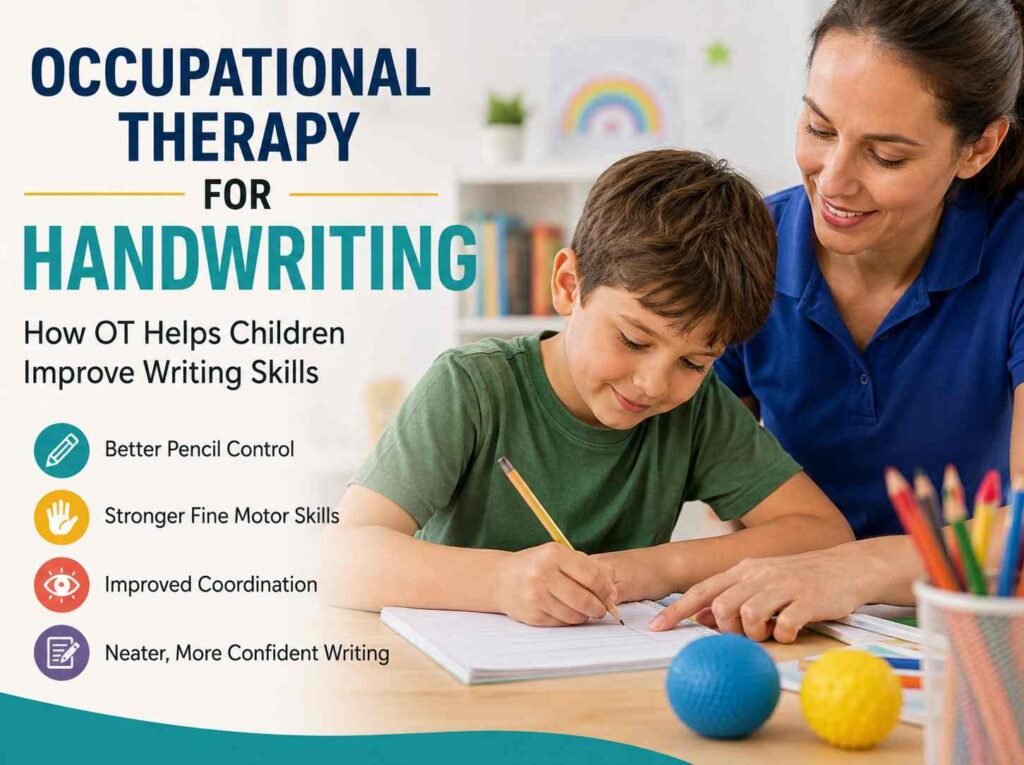
Occupational therapy for handwriting can help children develop the skills they need to write more comfortably, efficiently and independently. A paediatric occupational therapist can assess factors such as fine motor control, pencil grasp, hand strength, posture, visual-motor integration, coordination and handwriting mechanics, then provide strategies based on the child’s individual needs. Handwriting difficulties can look different from one child to another. Some children struggle with letter formation or spacing, while others write very slowly, tire quickly, press too hard with their pencil or avoid writing altogether. Understanding the reason behind the difficulty is an important first step towards effective support. What Is Occupational Therapy for Handwriting? Occupational therapy for handwriting is an individualised approach that addresses the physical, visual, motor and functional skills involved in writing. Instead of focusing only on repeated handwriting practice, an occupational therapist looks at the complete writing process. This can include: Handwriting is an important school-based activity, so difficulties with writing can affect more than the appearance of a child’s work. They can also influence classroom participation, confidence, task completion and independence. How Does Occupational Therapy Help With Handwriting? Occupational therapy can improve handwriting by identifying the underlying skills that are making writing difficult and targeting those skills through purposeful activities. For example, a child who struggles to control a pencil may need support with fine motor control and hand strength. A child whose writing is poorly aligned may have difficulty with visual-motor integration or spatial awareness. Another child may know how letters should look but struggle to form them because the required hand movements are difficult. An occupational therapist can therefore look beyond messy handwriting and determine which areas may be affecting functional writing. What Handwriting Problems Can Occupational Therapy Address? Children may benefit from occupational therapy when handwriting difficulties are persistent or interfere with everyday school activities. Common signs include: A child does not need to have a diagnosed condition to experience handwriting difficulties. An occupational therapy assessment can help identify the skills that may need additional support. What Does an Occupational Therapist Assess for Handwriting? A handwriting occupational therapy assessment can involve much more than looking at a sample of written work. The therapist may observe how the child sits, holds the pencil, moves their fingers and hands, processes visual information and manages a writing task. Pencil Grasp and Pencil Control The way a child holds and moves a pencil can affect writing efficiency and comfort. An occupational therapist may assess pencil grasp, finger movement, pencil pressure and overall pencil control. Where appropriate, the therapist may trial different pencil grips or writing tools to determine whether they make writing easier. Fine Motor Skills Fine motor skills involve the controlled movement of the hands and fingers. Children use these skills for pencil manipulation, drawing, cutting, fastening clothing and many other everyday activities. Developing fine motor control can therefore support the movements required for handwriting. Hand Strength and Endurance Handwriting requires sustained, controlled movements. Reduced hand strength or endurance may contribute to tiredness during writing. An occupational therapist may use activities that develop finger strength, hand strength and endurance when these skills are relevant to the child’s handwriting difficulties. Visual-Motor Integration Visual-motor integration involves coordinating visual information with hand movements. It can influence letter formation, sizing, alignment, spacing and copying. A child may understand what a letter should look like but still find it difficult to reproduce the shape accurately on paper. Posture and Positioning A stable sitting position can help support controlled hand movements. An occupational therapist may look at the child’s posture, seating position, desk height, wrist position and overall positioning during handwriting. Motor Planning and Attention Handwriting requires children to remember movement patterns, organise their actions and remain engaged with the task. Difficulties with motor planning or attention may affect writing performance. What Are Some Occupational Therapy Activities for Handwriting? Occupational therapy handwriting activities should be selected according to the child’s individual needs. The purpose is to develop skills that can transfer into functional writing rather than simply keeping the child busy. Activities may include: Tactile handwriting activities can also provide children with another way to learn and practise letter shapes before transferring those movements to paper. The most appropriate activities depend on the child’s assessment. A child with reduced hand strength may need a different intervention from a child whose primary difficulty is visual-motor integration. Can Occupational Therapy Improve Pencil Grip? Yes, occupational therapy can address pencil grip when the child’s grasp is affecting handwriting function. However, there is not necessarily one perfect pencil grasp that every child must use. An occupational therapist considers whether the child’s grasp allows adequate control, comfort, efficiency and endurance. If pencil control is difficult, an OT may explore pencil grips, different pencil sizes, positioning or preparatory fine motor activities. These strategies should be chosen based on the child’s individual needs rather than simply changing a grasp because it looks different. How Can I Improve My Child’s Handwriting at Home? Parents can support handwriting development with short, practical activities that build the skills needed for writing. Useful activities may include: Keep practice manageable and focus on quality rather than making a child complete long handwriting sessions. If handwriting consistently causes fatigue, frustration or avoidance, simply increasing handwriting practice may not address the underlying difficulty. An occupational therapy assessment can help identify what is making the task challenging. For additional support, see Paediatric Occupational Therapy. When Should a Child See an Occupational Therapist for Handwriting? Consider an occupational therapy assessment when handwriting difficulties are persistent, interfere with school participation or cause significant frustration or fatigue. Professional support may be worth considering if your child: An assessment does not automatically mean that a child has a developmental or learning condition. It can simply help identify their strengths, difficulties and appropriate support strategies. Can OT Help With Dysgraphia? OT can support the functional handwriting difficulties associated with dysgraphia, but poor handwriting alone does not establish a dysgraphia diagnosis. Dysgraphia can involve difficulties with written expression and handwriting.
Occupational Therapy for Fine Motor Skills: How OT Helps Children Build Hand Strength and Coordination
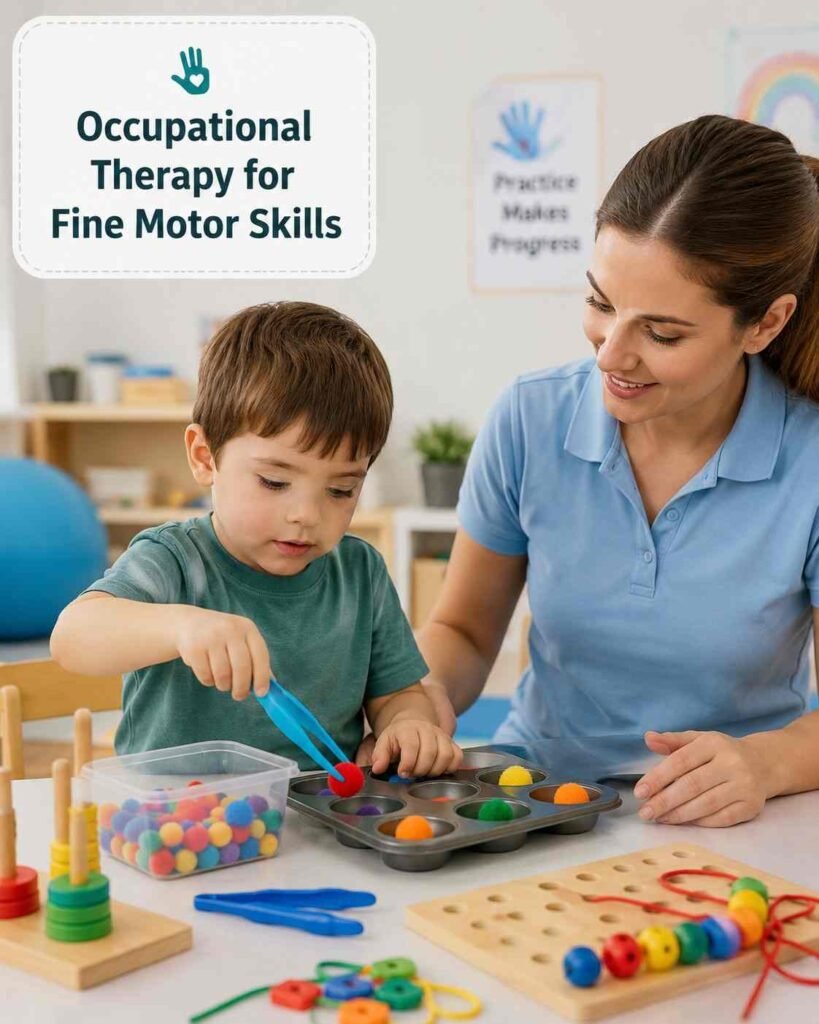
Fine motor skills involve the small muscles and precise movements of the hands, fingers and wrists. Children use these skills for everyday tasks such as writing, drawing, using scissors, doing up buttons, using cutlery, tying shoelaces and handling small objects. Occupational therapy can help children who have difficulty with fine motor skills by assessing the underlying challenges and using targeted, play-based and functional activities to improve hand strength, coordination, dexterity, pencil control and independence. For parents, it is important to understand that fine motor development is not just about handwriting. These skills support a child’s ability to participate confidently in school, play, self-care and everyday activities. What Are Fine Motor Skills? Fine motor skills are the controlled movements that involve the smaller muscles of the hands and fingers. They allow a child to make precise movements and manipulate objects accurately. Examples include: Fine motor development also depends on skills such as hand strength, finger dexterity, hand-eye coordination, bilateral coordination, finger isolation, grasp and visual-motor integration. A child may therefore have difficulty with fine motor tasks even when they appear physically strong overall. Do Occupational Therapists Help With Fine Motor Skills? Yes. Occupational therapists can help children develop fine motor skills when difficulties affect their ability to participate in everyday activities. A paediatric occupational therapist looks beyond the individual movement and considers how the difficulty affects the child’s functional activities. For example, if a child struggles to hold a pencil, an OT may look at: The goal is not simply to make a child’s fingers stronger. The goal is to help the child use their developing skills more effectively in meaningful activities. If you would like to understand the broader role of a paediatric OT, you can read our guide on what a paediatric occupational therapist does. How Does Occupational Therapy Improve Fine Motor Skills? Occupational therapy for fine motor difficulties is generally personalised to the child’s needs. An OT may work through several stages. 1. Assessment The occupational therapist considers the child’s current abilities and the activities that are difficult for them. This may include observing: 2. Setting Functional Goals Rather than focusing only on an isolated movement, therapy goals can relate to activities that matter to the child and family. For example, a goal may involve: 3. Targeted Activities The OT chooses activities that address the particular skills contributing to the difficulty. For example, activities involving resistance may support hand strength, while threading or lacing may encourage bilateral coordination and finger control. 4. Functional Practice Children can then practise these skills through meaningful activities such as drawing, dressing, playing, writing or using classroom materials. 5. Home Strategies An occupational therapist may also provide parents and carers with practical strategies and activities that can be incorporated into everyday routines. This can make skill development feel like play and participation rather than repetitive exercise. Fine Motor Skills Occupational Therapists May Work On Fine motor performance involves several different skills working together. Hand and Finger Strength Children need sufficient strength to hold, squeeze, manipulate and control objects. Hand strength can contribute to tasks such as: Activities such as playdough, therapy putty and squeezing objects may be incorporated into therapy when appropriate. Pincer Grasp A pincer grasp involves using the thumb and fingers to pick up and manipulate small objects. Children use this type of precision movement when handling: Developing precise finger movements can support later functional tasks requiring dexterity. Pencil Grasp and Control Pencil control is an important fine motor skill for school-aged children. Difficulties may appear as: Occupational therapy may address the underlying factors rather than simply telling a child to change their pencil grip. Bilateral Coordination Bilateral coordination means using both sides of the body together effectively. For example, when cutting paper, one hand controls the scissors while the other hand holds and moves the paper. Other examples include: Hand-Eye Coordination Hand-eye coordination allows a child to use visual information to guide their hand movements. It is important for: Finger Isolation and Dexterity Children sometimes need to develop the ability to move individual fingers with greater control. Finger isolation and dexterity contribute to precise movements needed for tasks such as pressing buttons, manipulating small objects and controlling writing tools. In-Hand Manipulation In-hand manipulation involves moving and adjusting an object within the hand. For example, a child may need to move a pencil into the correct writing position or adjust a small object using their fingers. These movements can be important for efficient classroom and self-care activities. Everyday Activities That Require Fine Motor Skills Fine motor skills are involved in much more than handwriting. School activities Children may use fine motor skills when they: Self-care Fine motor skills can contribute to: Play Children also practise fine motor skills through: This is one reason play-based occupational therapy can be particularly useful for children. Fine Motor Activities Used in Occupational Therapy The most appropriate activity depends on the child’s specific needs. Some common fine motor activities include: Playdough and therapy putty Kneading, squeezing, rolling and pinching putty can encourage hand and finger strength and control. Threading and lacing Threading beads or using lacing cards can encourage finger dexterity, visual-motor skills and bilateral coordination. Tweezers and tongs Picking up small objects with tweezers or tongs requires controlled finger movements and hand-eye coordination. Sticker activities Peeling and placing stickers can encourage pincer grasp and precise finger movements. Scissor activities Cutting along lines and progressing to more complex shapes can support hand control and bilateral coordination. Drawing and tracing Drawing, colouring and tracing activities can provide opportunities to practise pencil control and visual-motor coordination. Construction activities Building with blocks, LEGO or similar materials can involve grasping, manipulating and positioning objects while encouraging coordination. Dressing activities Practising buttons, zips and other fasteners connects fine motor development directly with independence in daily life. The important point is that activities should match the child’s current abilities and goals. More activities are not necessarily better; the right activity is one that addresses the underlying skill and has a meaningful
Sensory Processing Difficulties in Children: Signs, Causes and How to Help
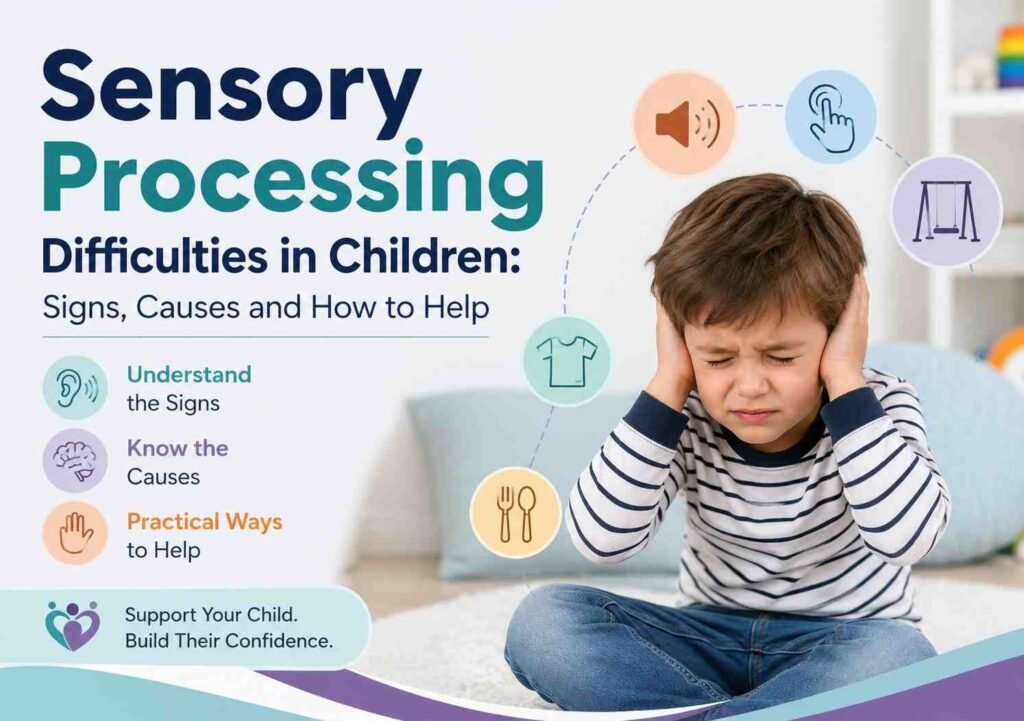
Sensory processing difficulties in children occur when a child has difficulty detecting, interpreting, organising or responding to sensory information from their environment or their own body. This can make everyday experiences such as loud noises, certain clothing, eating, movement, touch or bright lights feel uncomfortable, overwhelming or difficult to manage. Some children may be oversensitive to sensory input, while others may be undersensitive and seek more sensory experiences. These differences can affect a child’s behaviour, attention, emotional regulation, learning, independence and participation in everyday activities. Importantly, sensory issues do not automatically mean that a child is autistic. Sensory differences can occur in children with or without autism, so it is important to consider the child’s overall development and individual needs. What Are Sensory Processing Issues? Sensory processing refers to the way the brain receives, organises and responds to information from the senses. Children process information from sight, hearing, touch, smell and taste, as well as movement, balance and awareness of where their body is positioned. When sensory processing is difficult, a child may respond differently to experiences that other children seem to manage easily. For example, a child might: These behaviours should not automatically be interpreted as deliberate misbehaviour. They may be a child’s response to sensory information that feels uncomfortable or overwhelming. What Are Common Sensory Processing Difficulties in Children? Sensory processing difficulties can affect different sensory systems, and every child may experience them differently. 1. Sensitivity to Sounds Some children are particularly sensitive to sounds that other people can tolerate easily. A child may: The difficulty may become more noticeable when several sounds occur at the same time. 2. Sensitivity to Touch Touch sensitivity can make everyday activities such as getting dressed or personal care challenging. A child may dislike: They may repeatedly remove certain clothes or become distressed when asked to wear them. 3. Sensory Issues With Food Sensory processing difficulties can sometimes affect eating. A child may avoid foods because of their: For example, a child may prefer foods with a particular texture or refuse to eat foods that feel different in their mouth. However, picky eating can have many possible causes, so sensory processing should not automatically be assumed to be the reason. 4. Sensitivity to Light and Visual Information Some children may find bright lights or visually busy environments overwhelming. They may: 5. Movement and Balance Difficulties Movement-related sensory differences can appear in different ways. Some children may constantly seek movement by: Other children may avoid movement activities such as swings, slides or climbing equipment. 6. Body Awareness Difficulties Some children may have difficulty understanding where their body is in relation to objects and people around them. This can sometimes look like: What Do Sensory Processing Difficulties Look Like in Everyday Life? One of the easiest ways to recognise sensory difficulties is to look at how they affect everyday routines. Getting Dressed A child may refuse certain clothes because of their texture, seams, labels, tightness or other sensations. Eating A child may avoid particular foods because of their taste, smell, texture, appearance or temperature. Bathing Water, shampoo, temperature or the sensation of washing may feel uncomfortable. Teeth Brushing Some children may find the sensation, taste or texture of toothpaste or a toothbrush difficult to tolerate. School Noise, lighting, movement and other sensory information in a classroom may make concentration and participation more challenging. Play A child may avoid certain activities or repeatedly seek specific types of movement or sensory experiences. Social Situations Busy environments, crowds and multiple sensory inputs may contribute to feelings of overwhelm. When sensory difficulties affect several of these areas, it can have a significant impact on a child’s independence and participation. If you are noticing difficulties with everyday activities, you can also learn more about occupational therapy for daily living skills in Australia. What Are the Signs of Sensory Processing Difficulties in Children? There is no single behaviour that confirms sensory processing difficulties. However, parents may notice consistent patterns such as: The most important consideration is not simply whether a child shows one of these behaviours, but whether sensory difficulties are affecting their everyday participation and wellbeing. If several of these signs are affecting your child’s routines, read our guide to signs your child needs occupational therapy. Can a Child Have Sensory Issues but Not Be Autistic? Yes. A child can have sensory issues without being autistic. Sensory differences can occur for different reasons, and sensory behaviours alone cannot be used to diagnose autism. Some autistic children experience sensory differences, but not every child with sensory processing difficulties is autistic. If you are concerned about your child’s development, behaviour or sensory responses, it is better to seek an appropriate professional assessment rather than trying to determine the cause based on one or two behaviours. For families supporting a child with autism, our guide on occupational therapy for children with autism explains how occupational therapy can support participation and everyday activities. Is Sensory Processing Disorder the Same as Sensory Processing Difficulties? The terms sensory processing disorder, sensory processing difficulties and sensory processing issues are often used when discussing challenges with responding to sensory information. Terminology can vary between professionals and health systems. For parents, one of the most useful questions is: How are my child’s sensory difficulties affecting their everyday life? For example, are they making it difficult for your child to: Understanding the functional impact can help determine what type of support may be appropriate. How Can Sensory Processing Difficulties Affect a Child’s Daily Life? Sensory difficulties can affect activities that other children may find straightforward. A child may experience difficulties with: Over time, these difficulties can affect a child’s confidence and ability to participate comfortably at home, school and in the community. If you want to understand more about the role of occupational therapy, read what a paediatric occupational therapist does. How Can I Help a Child With Sensory Processing Difficulties at Home? There is no single sensory strategy that works for every child. Strategies should be based
Occupational Therapy for Children With ADHD: How OT Can Support Focus, Regulation and Everyday Skills
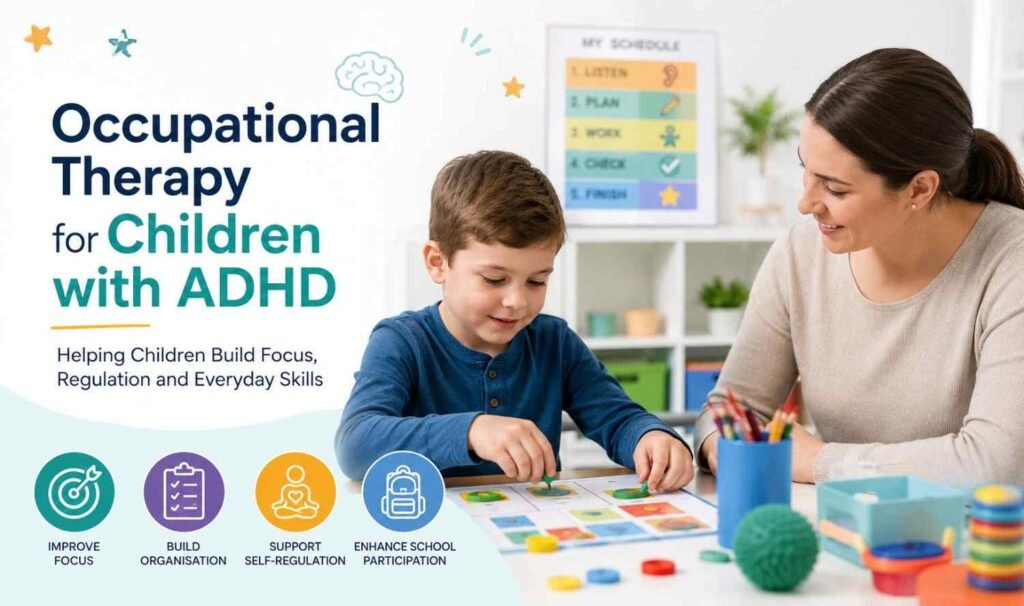
Parents of children with ADHD often notice that the challenges extend beyond simply “not paying attention”. A child may know what they are supposed to do but struggle to start the task, stay with it, remember the steps, manage frustration or move from one activity to another. These difficulties can affect mornings, homework, classroom participation, friendships, self-care and family routines. This is where occupational therapy for children with ADHD may have an important role. Rather than trying to change a child’s personality or eliminate ADHD traits, occupational therapy focuses on the practical skills and environmental supports that can help a child participate more successfully in everyday activities. An occupational therapist may work with a child on areas such as attention, task completion, organisation, emotional regulation, routines, self-management and functional participation. The exact approach depends on the child’s strengths, challenges and goals. What Is Occupational Therapy for Children With ADHD? Occupational therapy for children with ADHD is a personalised approach that focuses on how ADHD-related difficulties affect a child’s everyday participation. For a child, everyday activities can include: ADHD can affect these activities in different ways. One child may struggle mainly with distractibility, while another may have greater difficulty with impulsivity, emotional regulation, organisation or transitions. An OT considers the functional impact rather than looking only at the diagnosis. This is an important distinction because two children with ADHD can have completely different occupational therapy goals. How Can OT Help a Child With ADHD? Occupational therapy may help children develop strategies that make everyday tasks more manageable. Rather than providing a generic programme for every child with ADHD, an OT can identify specific barriers and work towards practical goals. Some common areas of support include: 1. Attention and Task Completion A child with ADHD may start an activity enthusiastically but lose focus before finishing it. This can happen during: OT may help identify what makes a task difficult and introduce practical strategies to support participation. For example, the therapist may look at how long the child can comfortably engage, how instructions are presented, whether the environment contains distractions and whether the task needs to be broken into smaller steps. The goal isn’t simply to make a child “sit still”. It is to help them participate more effectively in activities that matter. 2. Organisation and Executive Functioning Executive functioning involves skills that help children manage tasks and everyday demands. A child with ADHD may find it difficult to: These difficulties can become especially noticeable as school demands increase. An occupational therapist may help develop practical systems that make expectations easier to understand and follow. For example, a child may benefit from a visual sequence for getting ready in the morning, a simple system for organising school materials or a structured approach to breaking homework into manageable sections. Australian OT providers commonly identify organisation, planning, task initiation and completion as functional areas that can be supported for children with ADHD. 3. Emotional Regulation and Impulse Control ADHD can sometimes make it difficult for a child to pause, manage frustration or respond flexibly when something doesn’t go according to plan. Parents may notice: Occupational therapy may explore what happens before, during and after these situations. Instead of simply telling a child to “calm down”, an OT can work with the child and family to identify practical strategies that support regulation. These strategies should be individualised. What helps one child regulate may not be useful for another. 4. Supporting School Participation ADHD-related difficulties can become particularly noticeable in the classroom. A child may understand the lesson but struggle with the demands surrounding learning. For example, they may find it difficult to: Occupational therapy for ADHD at school can therefore focus on functional participation rather than simply academic performance. An OT may consider the child, the activity and the environment together. Where appropriate, collaboration with parents, teachers and other professionals can help strategies remain consistent across settings. 5. Building Independence in Daily Routines ADHD does not only affect schoolwork. Some children struggle with everyday routines because remembering and completing a sequence of steps can be difficult. A morning routine might involve: For some children, each individual task is manageable, but completing the whole sequence independently is much harder. An OT can look at where the routine breaks down and help develop a more manageable structure. This may involve visual prompts, simplified steps, environmental changes or other personalised strategies. 6. Supporting Self-Regulation Through Movement Movement can be relevant for some children with ADHD, particularly when it helps them participate in an activity more effectively. A therapist may consider whether movement opportunities, changes to the environment or activity structure could support engagement. However, there is no single “ADHD exercise” that works for every child. Online lists sometimes present activities as if they are universally appropriate. They are not. The right activity depends on the child’s needs, safety, preferences and therapeutic goals. Current research is also developing. A 2026 randomised controlled trial reported improvements across sensorimotor, attention, executive-functioning, emotional-regulation and participation measures following an Ayres Sensory Integration-based OT intervention in children with ADHD, although this should not be interpreted as meaning every child will respond in the same way. 7. Fine Motor and Handwriting Support Some children with ADHD also experience difficulties with handwriting or other fine motor tasks. This can become frustrating when a child has ideas they want to communicate but struggles with the physical demands of writing. An OT may consider factors such as: The purpose is not simply to make handwriting look neater. Instead, the therapist considers whether underlying functional difficulties are making classroom participation harder. 8. Supporting Transitions Moving from one activity to another can be particularly challenging for some children with ADHD. Examples include: A child may become frustrated because the transition requires them to stop one activity, shift attention and begin something else. An OT may explore ways to make transitions more predictable and manageable. This could include advance warnings, visual cues, consistent routines or other strategies suited to the individual
Occupational Therapy for Children with Autism: How OT Supports Everyday Skills and Independence
Occupational Therapy for Children with Autism Every autistic child is different. Some children may find certain sensory experiences overwhelming, while others may have difficulty with routines, transitions, communication, play or everyday activities. These differences can sometimes make ordinary tasks at home, school or in the community more challenging. Occupational therapy for children with autism focuses on helping children participate more comfortably and confidently in the activities that are meaningful to them. Rather than taking a one-size-fits-all approach, a paediatric occupational therapist looks at the child’s individual strengths, needs, environment and goals. Therapy may focus on developing practical strategies that support participation in everyday life, from getting ready in the morning to taking part in classroom activities or managing changes to familiar routines. If you’re interested in understanding the broader reasons a child may benefit from occupational therapy, see our guide on why a child may need occupational therapy. How Does Occupational Therapy Help Autistic Children? Occupational therapy can support autistic children in developing skills and strategies that make everyday activities more manageable. An occupational therapist may work with a child to support: The goal is not to change who a child is. Instead, occupational therapy aims to identify barriers that may be affecting participation and find practical, individualised ways to support the child. For example, if a child becomes overwhelmed by noise in a classroom, an OT may explore environmental adjustments and strategies that help the child participate more comfortably. If getting dressed is difficult because of clothing textures, the therapist may explore the sensory experience involved and work with the child and family to develop practical approaches. What Does an OT Do for Autism? An occupational therapist working with an autistic child may begin by learning about the child’s everyday experiences. This can include understanding: The therapist can then work with the child and their family to establish meaningful goals. For a broader explanation of the role of a paediatric OT, you can read our article on what a paediatric occupational therapist does. OT Goals for Autism OT goals should be individualised to the child, rather than based simply on an autism diagnosis. Depending on the child’s needs, goals might involve: A goal should relate to something that has meaning in the child’s everyday life. How Can OT Support Sensory Differences in Autism? Sensory experiences can influence how a child participates in everyday activities. An autistic child may experience sounds, lights, textures, movement, smells or other sensations differently. Certain environments may therefore feel distracting, uncomfortable or overwhelming. Occupational therapy may help families understand how sensory differences relate to particular activities and identify strategies or environmental changes that may make participation easier. For example, a child who finds noisy environments difficult may benefit from changes to their surroundings or a planned strategy for managing busy situations. The focus should be on supporting participation and comfort, rather than expecting every child to respond to sensory input in the same way. Occupational Therapy for Autism and Daily Routines Predictable routines can be important for many children, but changes to routines can sometimes be particularly challenging for autistic children. An OT may help families break everyday routines into manageable steps and identify where the child is experiencing difficulty. This could involve routines such as: The therapist may suggest visual supports, environmental adjustments, step-by-step routines or other strategies that are appropriate for the individual child. If you’re unsure whether your child’s everyday difficulties may indicate a need for OT, our guide to signs your child may need occupational therapy provides more detail. Supporting Independence in Autistic Children A key purpose of paediatric occupational therapy is helping children participate in everyday activities as independently as possible. For an autistic child, independence might look different depending on their age, abilities, environment and personal goals. One child may be working towards independently putting on their shoes. Another may be learning to manage a school routine, prepare a simple snack or participate in community activities. OT intervention can break a larger activity into smaller, achievable steps and help the child practise those skills in a supportive way. The emphasis is on functional independence and meaningful participation, rather than expecting every child to achieve the same outcome. How Can OT Support Play and Participation? Play is an important part of childhood. It can provide opportunities for children to explore their environment, practise skills and interact with others. An occupational therapist may consider how an autistic child’s individual preferences, sensory experiences, motor skills and communication style influence their participation in play. Depending on the child’s goals, therapy may support: The aim is to support meaningful participation while respecting the child’s interests and individual ways of engaging. Occupational Therapy for Autism at School School environments can involve many demands at once: listening, writing, moving between classrooms, following routines, managing sensory input and interacting with other students. An OT may consider what barriers are affecting a child’s participation in these activities. Support may involve strategies related to: Where appropriate, occupational therapists may work collaboratively with families and other professionals involved in supporting the child. The goal is to help the child participate in their school environment in ways that are practical and appropriate for their needs. What Happens During an OT Assessment for Autism? An occupational therapy assessment is not simply about identifying what a child cannot do. The therapist may look at the child’s strengths, interests, abilities, challenges and environment to understand what is affecting participation. Depending on the child’s needs, assessment may consider areas such as: The therapist may also gather information from parents or carers and, when appropriate, collaborate with other people involved in the child’s care or education. The assessment findings can then help guide individualised goals and recommendations. What Are Examples of OT Activities for Autism? There is no single set of occupational therapy activities that is appropriate for every autistic child. Activities should be selected according to the child’s goals and needs. Examples may include: 1. Routine-Based Activities The therapist may practise parts of a
Why Do Kids Need Occupational Therapy? 7 Ways OT Can Help
Parents often want to know why occupational therapy for kids may be recommended and whether it can genuinely make a difference in their child’s everyday life. Paediatric occupational therapy is not simply about treating a particular skill or diagnosis. It focuses on helping children participate more confidently and independently in the activities that matter to them, including play, learning, self-care, family routines and social participation. So, why would a child need occupational therapy? A child may benefit from OT when difficulties with movement, coordination, sensory processing, emotional regulation, attention, self-care or other developmental skills begin to affect everyday activities at home, preschool or school. What Is Occupational Therapy for Kids? Occupational therapy for kids is a child-focused approach that supports children in developing the skills they need to participate in everyday activities. A paediatric occupational therapist looks at how a child’s abilities, environment and daily routines interact and identifies areas where additional support may be helpful. For children, “occupations” can include activities such as: The goal of paediatric occupational therapy is to support meaningful participation rather than focusing only on one isolated skill. Why Would a Child Need Occupational Therapy? There is no single reason a child may need OT. Children develop at different rates, and occupational therapy may be considered when a child is experiencing ongoing difficulties that affect their ability to participate in everyday life. A child may benefit from occupational therapy if they are finding it difficult to: An occupational therapist can assess the child’s individual needs and work with families to establish appropriate, functional goals. 7 Ways Occupational Therapy Can Help Children 1. Develop Fine Motor Skills Fine motor skills involve the smaller movements of the hands and fingers. Children use these skills throughout the day for activities such as drawing, writing, using scissors, doing up buttons, opening containers and handling toys. Occupational therapy helping children develop fine motor skills may involve activities designed around their individual needs and everyday goals. Rather than simply practising a movement repeatedly, an OT can consider how fine motor difficulties are affecting the child’s participation at home, preschool or school. 2. Support Gross Motor Skills and Coordination Children also need larger body movements to participate in play, physical activities and everyday routines. Some children may experience difficulties with: Paediatric occupational therapists can assess how these difficulties affect functional participation and develop appropriate strategies and activities to support the child. 3. Build Independence With Self-Care One of the important goals of occupational therapy for children can be helping children become more independent with everyday tasks. Depending on the child’s age and individual needs, this may include: These seemingly simple activities can be significant milestones for children and families. OT support can help break tasks into manageable steps and identify strategies that make participation easier. 4. Support Sensory Processing and Regulation Some children can find certain sounds, textures, movements, lights, smells or other sensory experiences difficult to manage. Sensory processing differences may affect a child’s ability to participate in everyday routines, play, learning or social situations. A paediatric OT may explore how a child responds to sensory information and how this affects their participation. Support may focus on helping the child and family understand their individual sensory needs and developing practical strategies for everyday environments. 5. Support School Readiness and Classroom Participation Starting or participating in school requires much more than academic knowledge. Children may need to manage: Early childhood occupational therapy can support functional skills that contribute to participation in preschool and school environments. Where appropriate, an OT may also work collaboratively with families and educators to help strategies fit naturally into the child’s daily environment. 6. Encourage Play and Social Participation Play is an important part of childhood development. It gives children opportunities to practise movement, communication, problem-solving, imagination and social interaction. Some children may find it difficult to: Occupational therapy for children and adolescents can consider how these challenges affect participation and identify strategies that support meaningful involvement in activities. 7. Support Children With Developmental or Additional Needs Children with different developmental or functional needs may benefit from occupational therapy depending on how their needs affect everyday participation. For example, OT may form part of a broader support approach for children experiencing difficulties associated with: Occupational therapy for children with autism, for example, may focus on functional goals such as self-care, participation, sensory regulation, play, routines or other skills relevant to the individual child. However, OT is not limited to children with a particular diagnosis. A child does not necessarily need a diagnosis to benefit from occupational therapy. How Does Occupational Therapy Help Children in Everyday Life? One of the biggest strengths of kids occupational therapy is its focus on real-life participation. Instead of asking only: “Can this child perform a particular skill?” an occupational therapist may also consider: “How is this difficulty affecting the child’s everyday life?” For example, a child who struggles with fine motor skills may also find handwriting, dressing or using classroom tools challenging. A child who finds sensory experiences difficult may struggle with busy environments, certain clothing textures or everyday routines. A child experiencing difficulties with self-regulation may find transitions, school participation or social situations challenging. Looking at the bigger picture allows occupational therapy to focus on functional skills, participation and independence. Can Occupational Therapy Help Toddlers? Yes. Occupational therapy for toddlers may be appropriate when developmental or functional difficulties are affecting everyday participation. Depending on the child’s needs, support may relate to: Early support can help families understand their child’s strengths and challenges and identify practical ways to encourage participation in everyday activities. Can Occupational Therapy Help Children With Autism? OT can be part of a child’s broader support team when autism-related differences affect everyday participation. For an autistic child, occupational therapy goals may relate to areas such as: The focus should always be on the individual child’s needs, strengths, priorities and functional goals rather than assuming every child with autism requires the same type of support. What Does an Occupational Therapist
Signs Your Child Needs Occupational Therapy: 10 Things Parents Should Know
Children develop at different rates, and occasional difficulties with dressing, handwriting, coordination, attention or emotional regulation are not necessarily a cause for concern. However, when these challenges persist or begin affecting a child’s ability to participate in everyday activities, it may be worth seeking professional advice. Paediatric occupational therapy can help children develop functional skills and strategies that support participation at home, school and in the community. But how do you know when a child may benefit from occupational therapy? In this guide, we’ll look at the signs your child needs occupational therapy, what a paediatric occupational therapist can help with, when to consider an assessment, and what parents can expect from the process. What Is Occupational Therapy for Kids? Occupational therapy for kids focuses on helping children participate in the everyday activities that are important to their development, wellbeing and independence. For children, these “occupations” can include: A child occupational therapist looks at the skills and environmental factors that may be making these activities difficult and works with the child and their family towards practical, meaningful goals. Occupational therapy is not simply about practising individual skills. The bigger goal is helping children participate in their everyday lives with greater confidence and independence. 10 Signs Your Child May Benefit From Occupational Therapy There isn’t one behaviour or milestone that automatically means a child needs OT. However, persistent difficulties across everyday activities may be worth discussing with a qualified professional. Here are some common signs to look out for. 1. Your Child Struggles With Fine Motor Skills Fine motor skills involve using the smaller muscles of the hands and fingers to perform precise movements. A child may have difficulty with: These skills are important for both early childhood occupational therapy and school participation. If fine motor difficulties consistently prevent your child from participating in age-appropriate activities, a paediatric occupational therapist can assess the underlying skills involved. 2. Handwriting Is Particularly Difficult Handwriting involves more than knowing how to form letters. Children need a combination of fine motor control, hand strength, visual-motor coordination, posture, pencil control and attention to complete written tasks. You may notice that your child: These difficulties can affect classroom participation and confidence. An occupational therapist can look beyond the handwriting itself to understand which underlying skills may be contributing to the difficulty. 3. Your Child Has Difficulty With Coordination, Balance or Movement Some children find physical activities more challenging than expected for their age. You may notice difficulties with: These challenges may affect both gross motor skills and everyday participation. A paediatric OT may assess coordination, postural control, motor planning and other functional skills to understand how these difficulties affect your child’s activities. 4. Your Child Has Strong Sensory Preferences or Sensitivities Sensory processing refers to how the nervous system receives and responds to information from the environment and the body. Some children may find particular sensory experiences difficult. For example, your child might: Sensory differences can sometimes affect play, school participation, self-care, emotional regulation and daily routines. An occupational therapist can help identify whether sensory processing differences are affecting your child’s ability to participate in everyday activities and discuss appropriate strategies. 5. Everyday Self-Care Is Still Very Difficult Children gradually develop independence with daily living skills. Depending on age and development, you may notice ongoing difficulties with: These activities can seem simple to adults, but they involve multiple physical, cognitive and organisational skills. Occupational therapy for children can break everyday activities into manageable steps and help children develop greater independence where appropriate. 6. Your Child Finds Attention, Organisation or Instructions Difficult Occupational therapy can also address functional challenges involving attention and executive functioning. A child may struggle to: These challenges can affect school, home routines and independence. An occupational therapist may look at the demands of the activity and environment alongside the child’s skills to identify practical strategies that support participation. 7. Your Child Has Difficulty Managing Emotions During Everyday Activities All children experience strong emotions. But some children may have persistent difficulty managing frustration, transitions or unexpected changes. You may notice: Emotional regulation can interact with sensory processing, communication, attention, routines and environmental demands. A paediatric occupational therapist may consider these factors when developing functional goals and strategies for a child. 8. Your Child Finds Play or Social Participation Difficult Play is an important part of childhood development. Through play, children practise movement, communication, problem-solving, social interaction and emotional skills. Some children may find it difficult to: If these challenges are persistent and affect your child’s ability to participate with peers, professional guidance may be helpful. 9. Your Child Has Ongoing Feeding or Eating Difficulties Feeding can involve sensory, motor and functional skills. Some children may have difficulty with: Food preferences are common in childhood, but persistent feeding difficulties that interfere with daily life may warrant professional discussion. Where appropriate, a child’s occupational therapist can consider sensory and functional factors contributing to feeding difficulties and determine whether further assessment or support is suitable. 10. Your Child Struggles With Visual-Motor or School Skills Some children have difficulty using visual information together with their hand movements. This can affect activities such as: These difficulties can involve visual-motor integration, visual processing, fine motor skills or coordination. If your child consistently struggles with school tasks despite practising, an occupational therapy assessment may help identify the skills affecting participation. Signs Your Child May Need OT by Age Children’s needs change as they grow, so signs can look different at different ages. Occupational Therapy for Toddlers For toddlers, concerns may involve: Occupational therapy for toddlers is generally focused on age-appropriate participation and development rather than expecting toddlers to perform skills before they are developmentally ready. Early Years Occupational Therapy For preschool-aged children, you might notice difficulties with: Early support can help families understand a child’s strengths and identify practical ways to support participation. School-Age Children For school-aged children, concerns may become more noticeable around: Adolescents Occupational therapy for children and adolescents can also support older children and teenagers with functional skills
What Is Occupational Therapy for Kids? A Complete Guide for Parents

If your child is finding everyday activities such as getting dressed, using cutlery, writing, playing, following routines, or participating at school difficult, you may have heard about occupational therapy for kids. But what is occupational therapy, and what does an occupational therapist do for a child? Paediatric occupational therapy helps children develop and use the skills they need to participate in everyday activities as independently and confidently as possible. A paediatric occupational therapist may support children with fine motor skills, coordination, self-care, handwriting, sensory processing, play, learning, attention, emotional regulation, and other functional skills. Occupational therapy is not only about a child’s diagnosis. It looks at the child’s individual strengths, challenges, environment, activities, and goals to understand what may be affecting their participation in everyday life. What Is Occupational Therapy? Occupational therapy is a type of healthcare support that helps people participate in meaningful everyday activities. For children, these activities can include: So, what is occupational therapy for? The purpose is to help a person participate in activities that are important to their everyday life. For children, this can involve building practical skills, adapting activities, changing environments, or finding strategies that make participation easier. What Does OT Stand for in Medical Terms? OT stands for occupational therapy or occupational therapist, depending on the context in which it is used. For example: When people search for OT meaning, OT in medical terms, or what does OT stand for in medical terms, they are generally referring to occupational therapy or an occupational therapist. What Is a Paediatric Occupational Therapist? A paediatric occupational therapist is an occupational therapist who works with children and young people. Paediatric occupational therapists help children develop skills that support participation in everyday childhood activities. Depending on the child, therapy may focus on fine motor development, coordination, self-care, play, handwriting, sensory processing, attention, emotional regulation, or other functional areas. A child does not necessarily need to have a specific diagnosis to discuss their difficulties with an occupational therapist. The important consideration is whether challenges are affecting their ability to participate in meaningful everyday activities. What Does a Paediatric Occupational Therapist Do? So, what does an occupational therapist do for a child? A paediatric occupational therapist first works to understand the individual child and the activities they are finding difficult. This may involve discussing concerns with parents or carers, observing the child, completing relevant assessments, identifying strengths and challenges, and developing practical goals. Depending on the child’s needs, an occupational therapist may help with: The exact support provided depends on the individual child. What Can an OT Help With? Parents often ask, “What can an OT help with?” Occupational therapy can support children with difficulties that affect their ability to participate in everyday activities. Fine Motor Skills Fine motor skills involve the controlled movement of the smaller muscles of the hands and fingers. Children use fine motor skills for activities such as: A child occupational therapist may use age-appropriate activities to help children develop these skills. Handwriting Some children may find handwriting more difficult than expected for their age. An occupational therapist may look at factors such as: The goal is not simply to make handwriting neater. The therapist considers the underlying skills that may be affecting the child’s ability to write and participate in classroom activities. Coordination and Motor Planning Some children have difficulty coordinating movements or working out how to complete unfamiliar physical tasks. Occupational therapy may support: These skills can affect a child’s participation in play, school and daily routines. Self-Care and Daily Activities Children gradually develop independence in everyday activities. Occupational therapy for children may support skills related to: An occupational therapist may break an activity into smaller steps and help a child practise each part in a supportive way. Play Skills Play is an important part of childhood. Children learn and practise many skills through play, including communication, movement, problem-solving, social interaction, creativity and emotional regulation. A paediatric occupational therapist may support children who find it difficult to: Sensory Processing Children receive sensory information from their surroundings and their own bodies. This can include information related to: Some children may become overwhelmed by certain sensory experiences, while others may actively seek particular types of sensory input. When sensory differences affect everyday participation, a paediatric OT may assess the child’s needs and recommend appropriate strategies to support participation and regulation. Why Would a Child Need Occupational Therapy? Why would a child need occupational therapy? Children may benefit from an occupational therapy assessment when difficulties with everyday skills are persistent or are affecting their participation at home, school or in the community. Parents may consider seeking professional advice if their child: These signs do not automatically mean that a child requires occupational therapy. A qualified professional can help determine whether an assessment is appropriate. Occupational Therapy for Toddlers Occupational therapy for toddlers may support young children who are experiencing difficulties with skills that are important for their everyday development and participation. Depending on the child’s needs, early childhood occupational therapy may focus on: For toddlers, therapy may be incorporated into play-based and age-appropriate activities so children can practise skills in ways that are meaningful and engaging. Early Years Occupational Therapy Early years occupational therapy focuses on supporting young children as they develop skills needed for everyday childhood activities. Early support may be considered when developmental or functional difficulties are affecting a child’s participation. Occupational therapists may work on foundational skills that support: Every child develops at their own pace, so support should be based on their individual needs rather than comparison with other children. Occupational Therapy for Children With Autism Occupational therapy for children with autism can focus on meaningful functional goals that support participation and independence. Depending on the child’s individual needs, an occupational therapist may support: The focus should be on supporting the child’s wellbeing, participation and individual goals rather than trying to change who they are. Occupational Therapy for Children and Adolescents Occupational therapy can support children and adolescents at different stages of
What Does a Paediatric Occupational Therapist Do? A Parent’s Guide
If your child finds everyday activities like getting dressed, using a pencil, managing sensory experiences, playing with others, or participating at school more difficult than expected, you may have heard the term paediatric occupational therapy. But what does a paediatric occupational therapist do? A paediatric occupational therapist (OT) helps children develop and practise the skills they need to participate more confidently and independently in everyday life. This can include skills for play, learning, self-care, school participation, social interaction, emotional regulation, fine motor development, sensory processing and daily routines. Occupational therapy for children is not simply about treating a particular condition. It focuses on what a child wants or needs to do in their everyday environment and identifies practical ways to support participation and independence. What Is Paediatric Occupational Therapy? Paediatric occupational therapy is a specialised area of occupational therapy focused on children and young people. The word “occupation” does not only mean a job. For children, occupations can include activities such as: A paediatric occupational therapist looks at the skills, environment and everyday activities that may be affecting a child’s participation. The goal is to help children build functional skills and find practical strategies that support their participation at home, school and in other meaningful environments. What Does a Paediatric Occupational Therapist Do? So, what does a paediatric occupational therapist do in practice? An OT first works to understand the individual child. This may involve talking with parents or carers, observing the child during activities, considering their strengths and challenges, and identifying areas where additional support may be useful. Depending on the child’s needs, an occupational therapist may help with: Rather than expecting every child to follow the same programme, paediatric OT support is generally tailored around the child’s individual goals and everyday needs. What Can Occupational Therapists Help With? Parents often ask, “What can an OT help with?” The answer depends on the child’s individual needs. Occupational therapists can support children across many areas of development and everyday participation. Fine Motor Skills Fine motor skills involve using the smaller muscles of the hands and fingers with control and coordination. Children may need support with: Occupational therapy activities can help children practise these skills through meaningful, age-appropriate activities. Gross Motor Skills and Coordination Gross motor skills involve larger body movements and whole-body coordination. An occupational therapist may support children who experience difficulty with activities involving: These skills can contribute to a child’s ability to participate in play, school and daily activities. Handwriting and School Skills Some children may understand what they want to write but struggle with the physical process of writing. A paediatric occupational therapist may look at factors such as: The aim is not simply to make handwriting look neater. The therapist considers the underlying skills that may be affecting the child’s ability to participate in classroom activities. Sensory Processing and Regulation Children experience and respond to sensory information in different ways. Sensory information can come from: Some children may become overwhelmed by certain sensations, while others may seek particular sensory experiences. Sensory processing differences can sometimes affect a child’s ability to participate in everyday routines, learning, play or social situations. A paediatric OT can assess how sensory factors may be affecting a child’s participation and, where appropriate, suggest practical strategies to support regulation and engagement. Self-Care and Daily Living Skills One of the important goals of children’s occupational therapy is helping children become more independent with everyday activities. Depending on age and individual needs, this can include: An OT may break a difficult activity into smaller steps and help a child practise those steps gradually. Play and Social Participation Play is an important part of childhood development. Children learn through play, and play can involve communication, movement, problem-solving, imagination, emotional regulation and social interaction. An occupational therapist may support children who experience difficulty with: The focus is on helping the child participate in activities that are meaningful to them. Emotional Regulation Some children may find it difficult to recognise, communicate or manage their emotions. An OT may help identify factors that contribute to difficulties with regulation and work with the child and their support network on practical strategies. This may involve supporting skills related to: The specific approach should always be individualised to the child’s needs. Executive Functioning, Attention and Organisation Occupational therapists may also support children who find certain thinking and organisational tasks challenging. Executive functioning can involve skills such as: These skills can influence how children participate in school, home routines and everyday activities. Why Would a Child Need Occupational Therapy? A child does not have to be “behind in everything” to benefit from occupational therapy. You might consider seeking professional advice if your child consistently finds particular everyday activities difficult or if these difficulties are affecting their participation at home, school or in the community. Examples may include a child who: These signs do not automatically mean that a child needs occupational therapy. A qualified professional can help determine whether an assessment is appropriate. Occupational Therapy for Toddlers and Young Children Early childhood occupational therapy can support young children as they develop skills needed for everyday activities. For toddlers and preschool-aged children, this may include areas such as: For young children, therapy can often be incorporated into engaging, age-appropriate activities rather than feeling like formal “exercise”. The focus should be on meaningful skills that help the child participate in everyday childhood experiences. Occupational Therapy and Early Intervention Early intervention occupational therapy focuses on identifying functional difficulties and supporting children as early as appropriate. Early support may be particularly valuable when developmental or functional difficulties are affecting a child’s participation in everyday routines. The exact support required depends on the child, their developmental stage, strengths, environment and goals. Parents should speak with an appropriately qualified health professional if they have concerns about their child’s development or everyday participation. Occupational Therapy for Children With Autism Occupational therapy may form part of the support team for some autistic children. The focus should not be on changing
Finding the Right NDIS Provider in Campbelltown NSW: Everything You Need to Know

If you or someone you love is living with a disability in Sydney’s south-west, you already know how important it is to find the right support. The National Disability Insurance Scheme (NDIS) has changed the lives of thousands of Australians — but only when you’re connected to a provider who genuinely understands your needs. Choosing an NDIS provider in Campbelltown NSW is one of the most important decisions a participant or their family can make. Get it right, and you gain a trusted partner who helps you reach your goals, live independently, and thrive in your community. Get it wrong, and it can mean frustration, wasted funding, and missed opportunities. This guide walks you through everything you need to know — from what NDIS support looks like in Campbelltown to what services are available locally, and how to find a provider who truly has your best interests at heart. What Is the NDIS and Who Does It Support? The National Disability Insurance Scheme is an Australian Government initiative that provides funding to people living with a permanent and significant disability. The NDIS gives participants the power to choose their own supports and services, putting control directly in their hands. In the Campbelltown region — which includes surrounding suburbs like Macquarie Fields, Ingleburn, Minto, Leumeah, Blair Athol, St Andrews, and Airds — there is a strong and growing community of NDIS participants. Families across this area rely on local disability support services to help their loved ones live meaningful, active lives. The NDIS doesn’t just support adults with physical disabilities. It also supports: Why Location Matters When Choosing an NDIS Provider It might seem like a small detail, but choosing a registered NDIS provider based in or close to Campbelltown makes a real difference day to day. A local provider understands the specific community resources, transport options, and services available in the Macarthur region. They can respond quickly when circumstances change. They’re part of the same community as you — they go to the same shops, schools, and parks. That familiarity builds genuine trust. Providers based far away often struggle with consistency. Support workers travel long distances, appointments get cancelled, and the personal connection that makes great care possible gets lost along the way. When you work with an NDIS provider who is already embedded in the Campbelltown community, you get a team that shows up reliably — and cares about the outcome. What NDIS Services Are Available in Campbelltown? A quality NDIS provider in Campbelltown NSW offers a wide range of support across multiple areas of life. Here’s what participants in the region can typically access: Daily Living and Personal Care Everyday tasks like bathing, dressing, grooming, and preparing meals can become challenging for people living with a disability. Personalised in-home support workers assist participants with these tasks while always respecting their dignity and independence. Domestic Assistance Keeping a home clean, organised, and safe is essential to wellbeing. Domestic assistance services cover tasks like cleaning, laundry, vacuuming, and general household maintenance — allowing participants to focus on the things that matter most to them. Support Coordination Navigating the NDIS can feel overwhelming. A support coordinator helps participants understand their plan, connect with the right service providers, and make the most of their available funding. In Campbelltown, having a support coordinator who knows the local landscape is incredibly valuable. NDIS Plan Management NDIS Plan management takes the administrative load off participants and their families. A plan manager handles invoices, tracks spending against budget, and liaises with service providers — so participants maintain full choice and control without drowning in paperwork. Positive Behaviour Support For participants who experience behaviours of concern, positive behaviour support (PBS) provides evidence-based strategies that improve quality of life. Positive Behaviour Support practitioners work with the participant, their family, and their support network to understand the reasons behind certain behaviours and find constructive ways forward. Allied Health and Paediatric Services Children in Campbelltown and nearby areas like Ingleburn, Minto, and Eagle Vale benefit enormously from early intervention services. These include occupational therapy, speech pathology, psychology, physiotherapy, behaviour therapy, and dietetics — all delivered by registered allied health Child professionals who specialise in working with children. Specialist Disability Accommodation (SDA) For participants who require a higher level of housing support, specialist disability accommodation provides purpose-built homes designed around individual needs. Specialist Disability Accommodation (SDA) gives participants safe, accessible living environments with the right level of care built in from the ground up. Rehabilitation Services Whether recovering from an injury, managing a chronic condition, or rebuilding function after illness, rehabilitation services support participants in regaining strength, mobility, and independence. This may include physiotherapy, exercise physiology, and allied health assessments. What Makes a Great NDIS Provider in Campbelltown? Not all NDIS service providers are created equal. When you’re comparing your options, here are the qualities that truly matter. Iconic Care Group: A Trusted NDIS Provider Serving Campbelltown NSW One of the most respected disability and allied health organisations serving the Campbelltown region is Iconic Care Group. Based locally, Iconic Care Group offers a comprehensive range of NDIS-funded and privately funded services for children, adults, and older Australians. Iconic Care Group is a fully registered NDIS provider in Campbelltown NSW, holding ISO 9001 certification and complying with all NDIS Quality and Safeguards Commission requirements. Their team includes experienced support workers, allied health professionals, and dedicated care coordinators who work together to deliver truly personalised support. What sets Iconic Care Group apart is their person-centred philosophy. Every care plan starts with you — your goals, your preferences, and your life. Their services are flexible and can be adjusted as your needs evolve over time. Their offering spans a wide range of supports, including: Families across Campbelltown, Macquarie Fields, Ingleburn, Leumeah, Minto, Blair Athol, and surrounding suburbs have trusted Iconic Care Group to support their loved ones. Their Google reviews consistently reflect the warmth, professionalism, and genuine care their team brings to every interaction. How to Get Started With the NDIS in Campbelltown