
Sensory Processing Difficulties in Children: Signs, Causes and How to Help
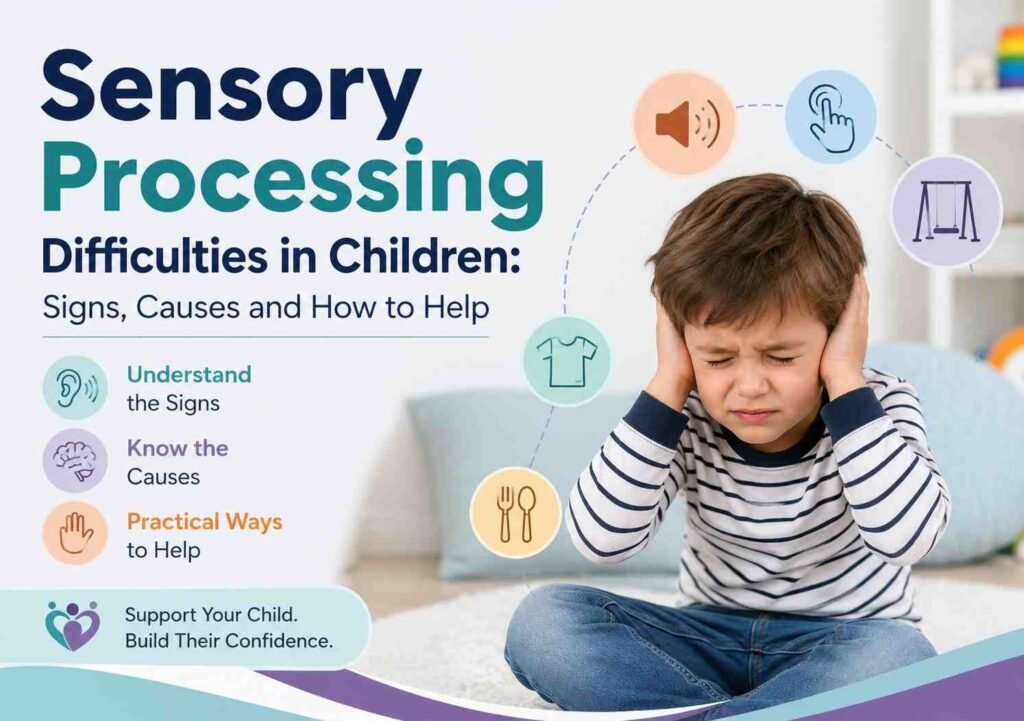
Sensory processing difficulties in children occur when a child has difficulty detecting, interpreting, organising or responding to sensory information from their environment or their own body. This can make everyday experiences such as loud noises, certain clothing, eating, movement, touch or bright lights feel uncomfortable, overwhelming or difficult to manage. Some children may be oversensitive to sensory input, while others may be undersensitive and seek more sensory experiences. These differences can affect a child’s behaviour, attention, emotional regulation, learning, independence and participation in everyday activities. Importantly, sensory issues do not automatically mean that a child is autistic. Sensory differences can occur in children with or without autism, so it is important to consider the child’s overall development and individual needs. What Are Sensory Processing Issues? Sensory processing refers to the way the brain receives, organises and responds to information from the senses. Children process information from sight, hearing, touch, smell and taste, as well as movement, balance and awareness of where their body is positioned. When sensory processing is difficult, a child may respond differently to experiences that other children seem to manage easily. For example, a child might: These behaviours should not automatically be interpreted as deliberate misbehaviour. They may be a child’s response to sensory information that feels uncomfortable or overwhelming. What Are Common Sensory Processing Difficulties in Children? Sensory processing difficulties can affect different sensory systems, and every child may experience them differently. 1. Sensitivity to Sounds Some children are particularly sensitive to sounds that other people can tolerate easily. A child may: The difficulty may become more noticeable when several sounds occur at the same time. 2. Sensitivity to Touch Touch sensitivity can make everyday activities such as getting dressed or personal care challenging. A child may dislike: They may repeatedly remove certain clothes or become distressed when asked to wear them. 3. Sensory Issues With Food Sensory processing difficulties can sometimes affect eating. A child may avoid foods because of their: For example, a child may prefer foods with a particular texture or refuse to eat foods that feel different in their mouth. However, picky eating can have many possible causes, so sensory processing should not automatically be assumed to be the reason. 4. Sensitivity to Light and Visual Information Some children may find bright lights or visually busy environments overwhelming. They may: 5. Movement and Balance Difficulties Movement-related sensory differences can appear in different ways. Some children may constantly seek movement by: Other children may avoid movement activities such as swings, slides or climbing equipment. 6. Body Awareness Difficulties Some children may have difficulty understanding where their body is in relation to objects and people around them. This can sometimes look like: What Do Sensory Processing Difficulties Look Like in Everyday Life? One of the easiest ways to recognise sensory difficulties is to look at how they affect everyday routines. Getting Dressed A child may refuse certain clothes because of their texture, seams, labels, tightness or other sensations. Eating A child may avoid particular foods because of their taste, smell, texture, appearance or temperature. Bathing Water, shampoo, temperature or the sensation of washing may feel uncomfortable. Teeth Brushing Some children may find the sensation, taste or texture of toothpaste or a toothbrush difficult to tolerate. School Noise, lighting, movement and other sensory information in a classroom may make concentration and participation more challenging. Play A child may avoid certain activities or repeatedly seek specific types of movement or sensory experiences. Social Situations Busy environments, crowds and multiple sensory inputs may contribute to feelings of overwhelm. When sensory difficulties affect several of these areas, it can have a significant impact on a child’s independence and participation. If you are noticing difficulties with everyday activities, you can also learn more about occupational therapy for daily living skills in Australia. What Are the Signs of Sensory Processing Difficulties in Children? There is no single behaviour that confirms sensory processing difficulties. However, parents may notice consistent patterns such as: The most important consideration is not simply whether a child shows one of these behaviours, but whether sensory difficulties are affecting their everyday participation and wellbeing. If several of these signs are affecting your child’s routines, read our guide to signs your child needs occupational therapy. Can a Child Have Sensory Issues but Not Be Autistic? Yes. A child can have sensory issues without being autistic. Sensory differences can occur for different reasons, and sensory behaviours alone cannot be used to diagnose autism. Some autistic children experience sensory differences, but not every child with sensory processing difficulties is autistic. If you are concerned about your child’s development, behaviour or sensory responses, it is better to seek an appropriate professional assessment rather than trying to determine the cause based on one or two behaviours. For families supporting a child with autism, our guide on occupational therapy for children with autism explains how occupational therapy can support participation and everyday activities. Is Sensory Processing Disorder the Same as Sensory Processing Difficulties? The terms sensory processing disorder, sensory processing difficulties and sensory processing issues are often used when discussing challenges with responding to sensory information. Terminology can vary between professionals and health systems. For parents, one of the most useful questions is: How are my child’s sensory difficulties affecting their everyday life? For example, are they making it difficult for your child to: Understanding the functional impact can help determine what type of support may be appropriate. How Can Sensory Processing Difficulties Affect a Child’s Daily Life? Sensory difficulties can affect activities that other children may find straightforward. A child may experience difficulties with: Over time, these difficulties can affect a child’s confidence and ability to participate comfortably at home, school and in the community. If you want to understand more about the role of occupational therapy, read what a paediatric occupational therapist does. How Can I Help a Child With Sensory Processing Difficulties at Home? There is no single sensory strategy that works for every child. Strategies should be based