
NDIS SDA Eligibility Assessment Checklist: Your Complete 2026 Guide
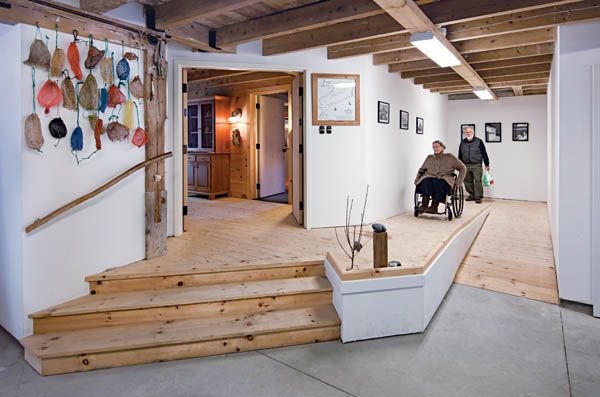
If you or someone you love lives with a significant disability and needs specialised housing, you’ve likely come across the term SDA — or Specialist Disability Accommodation. But understanding whether you actually qualify, what the assessment involves, and how to get the process started can feel overwhelming. Maybe you’ve been told SDA could be an option for you, but no one has clearly explained what it means or where to begin. Maybe you’re a carer or family member trying to find better housing for your loved one and don’t know which questions to ask. Or perhaps you’ve already started the NDIS process and hit a wall when it comes to housing support. You are not alone, and you have arrived at the right place. This guide breaks it all down for you. Whether you’re in Campbelltown, Sydney, or anywhere else in NSW, this complete NDIS SDA eligibility assessment checklist will walk you through everything you need to know — clearly, honestly, and in plain English. By the end, you’ll understand exactly what SDA is, whether you’re likely to qualify, and what steps to take next. What Is SDA in the NDIS? Specialist Disability Accommodation (SDA) is a type of NDIS funding that covers the cost of purpose-built or specially modified housing for participants with very high support needs or extreme functional impairment. SDA funding pays for the physical home — the building, its design features, and its registration as an approved SDA property. It does not cover the support services delivered inside that home. Those are funded separately through supports like Supported Independent Living (SIL). SDA properties are purpose-built to remove the physical barriers that standard housing creates for people with complex disabilities. Depending on the design category, this can include features like ceiling hoists, reinforced walls, wider doorways, emergency power backup, and fully accessible bathrooms. Specialist Disability Accommodation SDA is a targeted, needs-based support — only around 6% of NDIS participants qualify. But for those who do, it can make an enormous difference to their safety, independence, and quality of life. Who Is Eligible for SDA Funding? To access SDA through the NDIS, you need to meet specific eligibility criteria. The NDIS will look at your functional impairment, your support needs, and whether specialised housing would help you live more independently. You may be eligible for SDA if you: The NDIS uses the NDIS SDA eligibility assessment checklist criteria to assess whether your housing needs are reasonable and necessary as part of your NDIS plan. Being approved for NDIS funding alone is not enough — SDA must be specifically included in your plan. The NDIS SDA Eligibility Assessment Checklist Here is a practical checklist you can use to assess your readiness before going through the formal SDA assessment process. This is not a substitute for a professional assessment, but it gives you a clear picture of where you stand. ✅ Step 1 — Confirm You Have an Active NDIS Plan ✅ Step 2 — Demonstrate Extreme Functional Impairment Your impairment must be significant enough to require specialised housing. Consider whether you: ✅ Step 3 — Confirm Your Current Housing Is Not Appropriate The NDIS will want evidence that your current living situation does not meet your needs. You should be able to show that: ✅ Step 4 — Gather Supporting Evidence This is one of the most important parts of the SDA assessment. You will need: ✅ Step 5 — Identify the Right SDA Design Category There are four SDA design categories. Knowing which one suits you before your assessment helps make the process smoother: ✅ Step 6 — Consider Your Living Arrangements and Preferences The NDIS takes your preferences seriously. Think about: ✅ Step 7 — Request an SDA Assessment You or your Support Coordinator can request an NDIS SDA eligibility assessment checklist review through your NDIS planner or Local Area Coordinator (LAC). An SDA assessor — often a specialist OT — will conduct a thorough review of your needs, goals, and current situation. How the SDA Assessment Process Works Understanding what happens during the formal assessment process helps you feel prepared and confident going in. 1. Referral and Initial Review Your Support Coordinator, NDIS planner, or treating team refers you for an SDA assessment. At Iconic Care Group in Campbelltown NSW, our Support Coordination team can help you navigate this process from the start. 2. Functional Assessment A qualified assessor (typically an occupational therapist) conducts a detailed assessment of your functional capacity. They look at how you move, communicate, manage self-care, and interact with your environment. 3. Housing Assessment The assessor also reviews your current housing — what works, what doesn’t, and what type of SDA design would best meet your needs. 4. Report and Recommendation The assessor prepares a detailed report recommending an SDA design category and, in some cases, a building type or specific features. This report is submitted with your NDIS plan or plan review request. 5. NDIS Decision The NDIS reviews the evidence and decides whether SDA funding is reasonable and necessary for your situation. If approved, SDA funding is included in your plan under Capital Supports. SDA Funding: What Does It Cover? SDA funding covers the cost of living in an SDA-registered property. This includes a contribution to the property’s cost — essentially, you pay a “reasonable rent contribution” (usually around 25% of the Disability Support Pension), and the NDIS covers the rest. SDA funding does not cover: SDA funding levels vary significantly based on the design category and the number of residents. High Physical Support homes in low-density configurations attract the highest funding levels. SDA vs SIL: Understanding the Difference A common area of confusion is the difference between SDA and SIL (Supported Independent Living). SDA is about the physical property — the building, its design, and its registered status with the NDIS. SIL is about the support services delivered inside the property — the support workers who assist you with daily tasks. Many participants need both SDA and SIL,