How to Choose the Right Paediatric Therapist for Your Child in Australia
Choosing a paediatric therapist for your child can feel overwhelming. Parents often worry about making the wrong decision, missing important signs, or starting therapy too late. Every child is different, and there is no one-size-fits-all approach. Understanding how to choose the right paediatric therapist for your child in Australia helps replace confusion with clarity and allows families to move forward with confidence.
Therapy is not about fixing a child. It is about supporting development, strengthening skills, and helping children participate fully in daily life — at home, school, and in the community.
Understanding Your Child’s Individual Therapy Needs
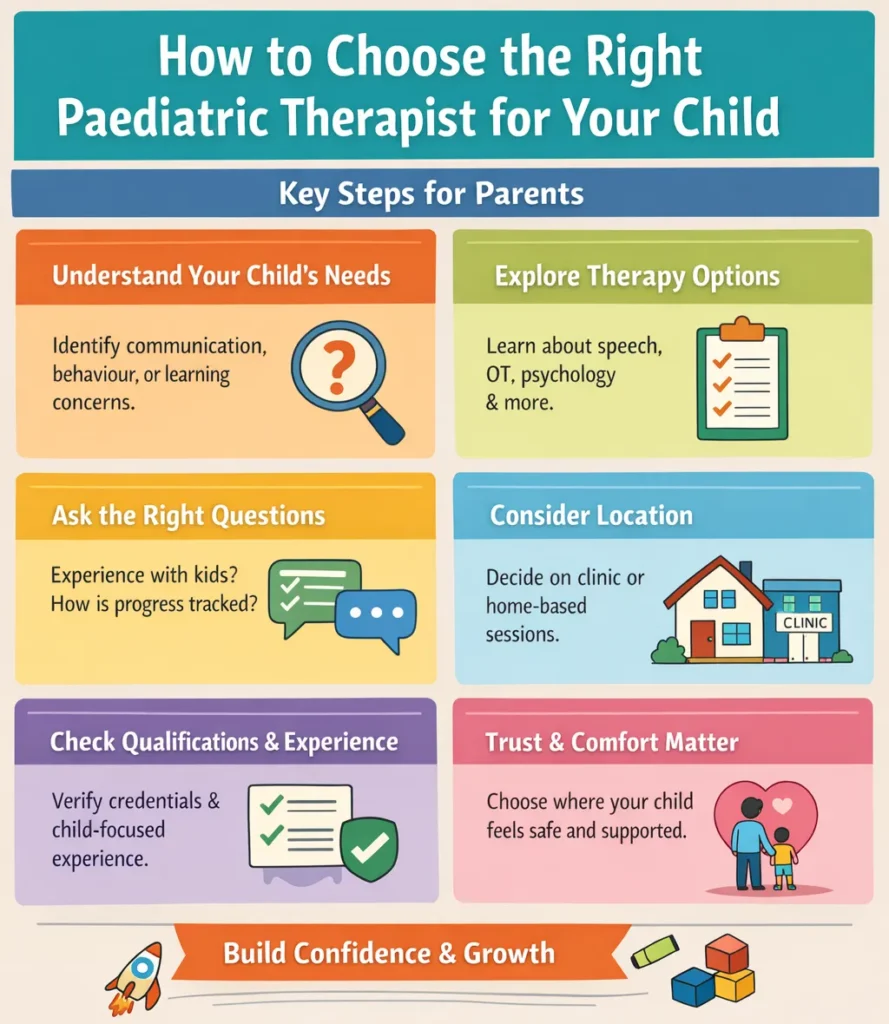
Knowing how to choose the right paediatric therapist for your child in Australia starts with understanding your child’s unique needs. Some children struggle with communication, others with movement, emotions, behaviour, or daily routines. The right therapist is someone who understands both the clinical side of development and the human side of working with children and families.
This decision is not rushed. It is thoughtful, informed, and centred on your child.
Understanding Why Therapy Needs Differ Between Children
No two children develop in the same way. Even children with similar challenges may need very different types of support.
Some children benefit from therapy because:
- Communication feels difficult
- Emotions feel overwhelming
- Movement or coordination is challenging
- Daily routines cause frustration
- School environments feel stressful
Understanding your child’s specific needs helps guide you toward the most suitable therapist rather than choosing based on titles alone.
Identifying the Type of Therapy Your Child May Need
Before choosing a therapist, it helps to understand the different therapy areas.
Common paediatric therapy types include:
- Speech therapy for communication and language
- Occupational therapy for daily skills, motor coordination, and sensory processing
- Behaviour therapy for emotional regulation and behaviour support
- Psychology services for mental health and emotional wellbeing
- Physiotherapy for movement, strength, and balance
You do not need to decide this alone. A professional assessment often helps clarify which therapy — or combination — is most appropriate.
Why Experience With Children Matters More Than Qualifications Alone
When learning how to choose the right paediatric therapist for your child in Australia, experience with children is critical.
Paediatric therapy is not the same as adult therapy. Children communicate differently, respond emotionally, and learn best through play and connection.
A strong paediatric therapist:
- Builds trust quickly
- Adapts sessions to a child’s mood and energy
- Uses age-appropriate strategies
- Engages parents as partners
A therapist who understands child development creates a safe space where progress feels natural.
The Importance of a Child-Centred Approach
The best therapists do not follow rigid plans. They adapt based on the child in front of them.
A child-centred approach means:
- Therapy goals are meaningful to the child
- Sessions feel supportive, not pressured
- Strengths are recognised alongside challenges
- Progress is flexible, not rushed
This approach helps children feel confident rather than labelled.
How Assessments Guide the Right Therapy Choice
Assessments are not exams. They are tools to understand how a child functions in daily life.
A quality assessment looks at:
- Strengths and challenges
- How a child communicates, moves, and interacts
- Sensory responses
- Emotional regulation
- Family concerns and priorities
Understanding assessment outcomes helps parents make informed decisions when choosing the right therapist.
Questions Parents Should Ask Before Choosing a Therapist
Asking questions is not being difficult — it is being informed.
Helpful questions include:
- What experience do you have working with children like mine?
- How do you involve parents in therapy?
- What does a typical session look like?
- How do you measure progress?
- How often do you review goals?
Clear communication builds trust from the start.
Clinic-Based vs Home-Based Therapy: What to Consider
Some therapy services are clinic-based, while others may occur at home or school.
Each option has benefits:
- Clinic-based therapy offers structured environments and specialised equipment
- Home-based therapy supports skills in real-life settings
Choosing depends on:
- Your child’s comfort
- Therapy goals
- Family routine
- Availability
There is no right or wrong choice — only what works best for your child.
The Role of Family Involvement in Therapy Success
Therapy does not stop when the session ends. Families play a crucial role in progress.
Effective therapy includes:
- Parent education
- Simple strategies for home
- Ongoing communication
- Collaboration with schools where needed
This partnership strengthens outcomes and helps skills generalise beyond therapy sessions.
Signs You May Need to Re-Evaluate Therapy Support
Sometimes therapy needs change — and that is okay.
Consider re-evaluation if:
- Goals no longer feel relevant
- Progress has stalled for an extended period
- Your child seems disengaged
- Family needs change
Knowing how to choose the right paediatric therapist for your child in Australia also means knowing when adjustments are needed.
Understanding Therapy Progress Takes Time
Progress in therapy is rarely linear. Some weeks show visible improvement, while others feel slower.
This is normal.
Therapy supports:
- Skill building
- Confidence
- Emotional growth
Patience and consistency matter more than speed.
Avoiding Common Mistakes When Choosing a Therapist
Parents often feel pressure to act quickly. Some common mistakes include:
- Choosing based on availability alone
- Expecting instant results
- Comparing children’s progress
- Overlooking family involvement
Taking time to understand options leads to better long-term outcomes.
How Therapy Builds Confidence in Children
Beyond skills, therapy builds confidence.
Children learn:
- “I can try.”
- “I can learn.”
- “I am supported.”
Confidence impacts learning, friendships, and emotional well-being — often more than any single skill.
Linking Therapy Choices to Broader Support
Many families benefit from learning about the range of supports available under Paediatric Therapy Services in Australia, which helps them understand how different therapies work together to support a child’s development.
For example, families exploring communication challenges may also find value in learning more about paediatric speech pathology in Australia, especially when speech, language, and social communication overlap with emotional or learning needs.
When Trust and Comfort Matter Most
A strong therapeutic relationship is built on trust.
Signs a therapist is a good fit:
- Your child feels safe and engaged
- Communication feels open
- Goals are realistic
- You feel heard as a parent
Trust allows therapy to work effectively.
Conclusion
Understanding how to choose the right paediatric therapist for your child empowers families to make confident, informed decisions. The right therapist supports not only skill development but also emotional well-being, independence, and confidence. By focusing on your child’s unique needs, asking the right questions, and valuing collaboration, families can create a strong foundation for meaningful progress and long-term growth.
Frequently Asked Questions
1. How do I know which type of paediatric therapist my child needs?
You don’t need to decide on your own. An initial assessment helps identify whether your child would benefit from speech therapy, occupational therapy, behaviour support, psychology, or another service based on daily challenges.
2. What qualifications should a paediatric therapist have in Australia?
A paediatric therapist should be registered with the relevant professional body and have experience working specifically with children. Practical experience with child development is just as important as formal qualifications.
3. How long does it take to see progress in paediatric therapy?
Progress varies for every child. Some children show changes within weeks, while others need more time. Consistency, family involvement, and realistic goals all influence progress.
4. Should parents be involved during therapy sessions?
Yes. Parent involvement is strongly encouraged. When parents understand strategies used in therapy, they can support their child at home, which often leads to better and longer-lasting outcomes.
5. Can I change therapists if the fit doesn’t feel right?
Absolutely. If your child feels uncomfortable or progress isn’t happening, it’s okay to re-evaluate and explore other options. The right therapist–child relationship is essential.
6. Is paediatric therapy only for children with diagnosed conditions?
No. Many children receive therapy without a formal diagnosis. Therapy can support skill development, confidence, and emotional well-being whenever daily challenges affect a child’s life.