Benefits of Early Paediatric Therapy for Children
Many parents hesitate when therapy is first suggested. Some hope their child will “grow out of it.” Others worry that starting therapy too early might label their child or make things feel more serious than they really are.
These thoughts are completely normal.
But when parents take time to understand the benefits of early paediatric therapy for children, their perspective often changes. Early therapy is not about fixing children — it is about supporting them during the years when learning, development, and emotional growth happen most rapidly.
This article explains why early support can make such a meaningful difference, not just for children, but for families as a whole.
Why Early Childhood Matters So Much
The early years of a child’s life are a period of incredible brain development. Neural connections are forming quickly, and children are constantly learning through movement, play, communication, and relationships.
During this stage:
- Skills are more flexible
- Habits are easier to shape
- Children respond more naturally to guidance
When challenges appear during these years, early therapy works with the child’s development instead of trying to correct patterns later on.
This is one of the most important benefits of early paediatric therapy for children — it supports growth at the right time, rather than waiting until difficulties become more established.
Early Therapy Is About Support, Not Severity
A common misunderstanding is that therapy is only for children with significant or permanent conditions. In reality, many children who benefit from early therapy are bright, curious, and capable — they just need extra guidance in specific areas.
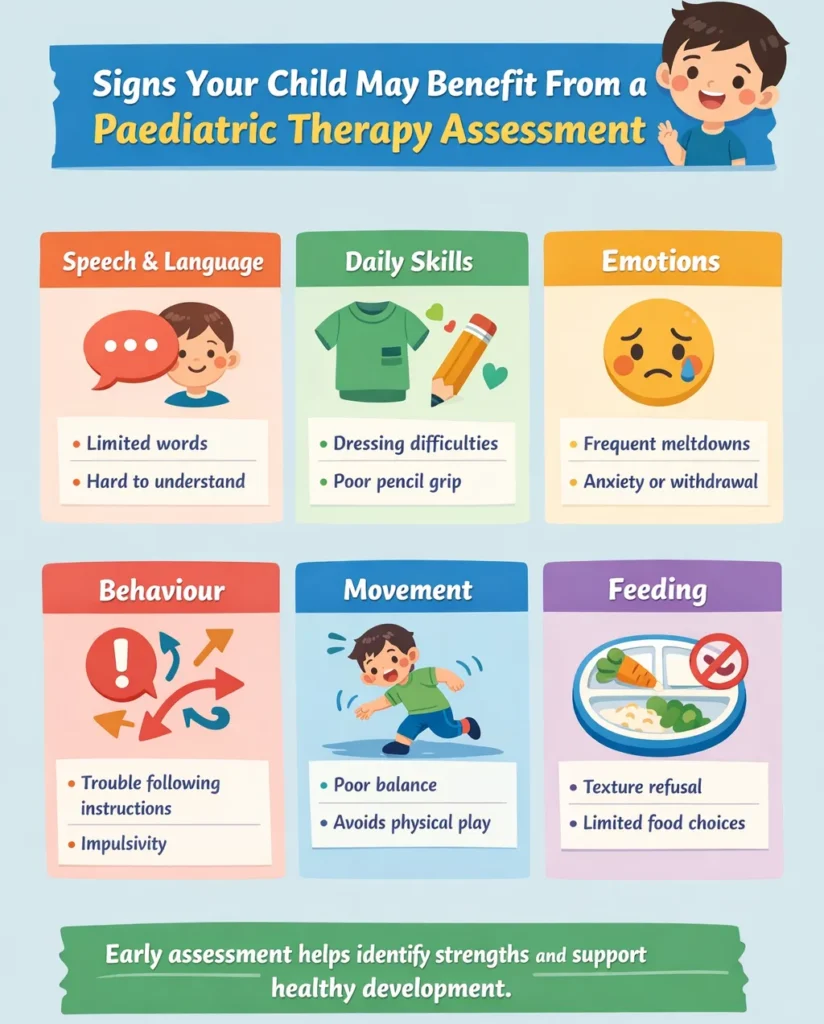
Early therapy may support:
- Speech and language development
- Emotional regulation
- Behaviour and attention
- Motor skills and coordination
- Daily living independence
In many cases, early therapy is short-term and preventative, helping children catch up before challenges affect confidence or learning.
Improved Communication Builds Confidence Early
Communication plays a major role in how children interact with the world. When a child struggles to express needs or understand others, frustration can build quickly.
Early therapy helps children:
- Develop clearer speech
- Understand and use language more effectively
- Build social communication skills
- Reduce emotional outbursts caused by miscommunication
When children feel understood — and can understand others — their confidence often grows naturally.
This is a key reason many families see clear benefits of early paediatric therapy for children in both home and school environments.
Supporting Emotional Regulation From the Start
Young children experience big emotions but don’t always have the tools to manage them. Without guidance, emotional responses can become overwhelming for both the child and the family.
Early therapy supports:
- Identifying emotions
- Learning calming strategies
- Managing frustration
- Developing resilience
Instead of reacting with distress, children learn healthier ways to cope — skills that support emotional wellbeing well into adolescence.
Stronger Behaviour Skills Without Punishment
Behaviour challenges are often misunderstood as discipline problems. In reality, behaviour is communication.
Early therapy helps children:
- Understand expectations
- Develop impulse control
- Adjust to routines and transitions
- Improve focus and attention
Rather than focusing on consequences, therapy focuses on skill-building. This approach supports positive behaviour without damaging a child’s confidence or self-esteem.
Independence in Daily Living Skills
Everyday tasks such as dressing, feeding, writing, or managing routines can be surprisingly challenging for some children.
Early therapy supports:
- Fine motor development
- Gross motor coordination
- Sensory processing
- Functional independence
When children gain independence in daily tasks, they often feel more capable and motivated — reducing stress for both parents and children.
Better Preparation for School and Learning
School places new demands on children, including attention, communication, emotional control, and physical coordination.
Children who receive early support often:
- Adjust more easily to classroom routines
- Participate more confidently
- Experience less learning-related anxiety
- Develop stronger peer relationships
These outcomes highlight another major benefit of early paediatric therapy for children — smoother transitions into formal learning environments.
Reducing Anxiety for the Whole Family
Uncertainty can be exhausting for parents. When concerns are left unanswered, families often feel stuck between worry and hope.
Early therapy provides:
- Clear understanding of a child’s needs
- Practical strategies for home
- Reassurance and direction
Parents often report feeling calmer and more confident once they know how to support their child effectively.
Preventing Secondary Challenges Later in Life
When early challenges go unsupported, children may develop secondary difficulties such as:
- Low self-esteem
- Avoidance of learning
- Social withdrawal
- Ongoing anxiety
One of the most overlooked benefits of early paediatric therapy for children is its preventative role. Supporting children early can reduce the risk of more complex challenges developing later.
Therapy That Grows With the Child
Early therapy is not rigid. Goals change as children grow, develop, and face new environments.
Therapists regularly adjust support based on:
- Progress made
- Changing needs
- School or social demands
This flexibility ensures therapy remains relevant, practical, and child-centred.
Parents Are Central to the Process
Early therapy works best when families are involved.
Parents learn:
- How to support skills at home
- How to respond to challenges calmly
- How to encourage progress through everyday activities
This collaboration often leads to more consistent outcomes and stronger parent-child relationships.
Therapy Is Not About Labels
Many parents fear that starting therapy means their child will be defined by a diagnosis. In reality, therapy focuses on abilities, not labels.
Early therapy:
- Highlights strengths
- Builds practical skills
- Encourages confidence
Children are supported as individuals, not categories.
How Early Therapy Fits Into Broader Support
Early therapy is often part of a broader support system that may include schools, healthcare providers, and family routines.
High-quality care is usually guided by a holistic approach like Paediatric Therapy Services in Australia, where professionals work together to support the whole child rather than isolated challenges.
A Natural Example of Early Support in Action
For example, a child who struggles with fine motor skills may begin to avoid drawing or writing. Early occupational therapy can gently build strength, coordination, and confidence through play — often preventing frustration and learning difficulties later on.
This kind of early, practical support is why families often explore services such as Paediatric Occupational Therapy when concerns first appear.
Is Early Therapy Always Necessary?
Not every child requires ongoing therapy. Some children benefit from:
- Short-term support
- Monitoring and guidance
- Home strategies alone
Early therapy helps families make informed decisions rather than waiting in uncertainty.
How Early Is Too Early?
There is no “too early” when concerns affect daily life.
If a challenge is noticeable, persistent, or causing stress, early guidance can be helpful — regardless of age.
What Early Therapy Looks Like in Practice
Early therapy sessions are usually:
- Play-based
- Child-led
- Flexible and supportive
Children are not forced to perform. They are guided gently in ways that feel natural and safe.
Why Early Support Builds Long-Term Confidence
Children who feel capable early are more likely to:
- Try new things
- Cope with challenges
- Believe in their abilities
This confidence often carries through school, relationships, and independence later in life.
Conclusion
The benefits of early paediatric therapy for children extend far beyond addressing immediate concerns. Early support nurtures communication, emotional regulation, independence, and confidence during the most important years of development. By recognising challenges early and seeking guidance, families give their children the opportunity to build strong foundations that support lifelong learning, wellbeing, and resilience.
Frequently Asked Questions
1. At what age should I consider paediatric therapy for my child?
There is no fixed age. If concerns affect your child’s communication, behaviour, movement, or daily skills, therapy can be helpful at any stage — even in early toddler years.
2. Do all children who show these signs need therapy?
Not always. Some children may only need monitoring or simple strategies at home. A professional assessment helps determine whether therapy is needed or if guidance alone is enough.
3. Will early therapy label my child?
No. Therapy focuses on building skills and confidence, not placing labels. Many children receive short-term support and move forward without ongoing therapy.
4. How long does early paediatric therapy usually last?
The duration varies. Some children benefit from a few sessions, while others may need longer support depending on their goals and progress.
5. Can parents support therapy at home?
Yes. Parent involvement is encouraged. Therapists often provide simple strategies that fit naturally into daily routines, helping children progress outside sessions.
6. What should I do if I’m unsure whether my child needs help?
If you feel uncertain or concerned, seeking guidance early is often helpful. An assessment can provide clarity, reassurance, and practical next steps — even if therapy isn’t required.