Early Signs Your Child May Need Paediatric Therapy
As a parent, you understand your child better than anyone else. From the way they play to how they communicate, every behaviour tells a story. Sometimes, you may notice the early signs your child may need paediatric therapy, such as delayed speech, emotional outbursts, difficulty with daily routines, or challenges at school.
These signs do not mean something is “wrong” with your child. They often indicate that your child may benefit from extra guidance and structured support during important developmental stages, helping them build confidence, independence, and essential life skills.
Why Paying Attention Early Matters
Children develop at different rates, and variations are completely normal. However, when certain delays or difficulties begin to interfere with daily life, learning, social interaction, or emotional well-being, early intervention becomes important.
Early support can:
- Strengthen foundational skills
- Reduce frustration and anxiety
- Build independence
- Improve school readiness
- Support emotional resilience
Paediatric therapy is not about changing who a child is. It is about supporting how a child learns, communicates, and engages with the world.
Early Signs Your Child May Need Paediatric Therapy
Recognising the early signs your child may need paediatric therapy allows families to act before small challenges grow into larger obstacles. Some children show one clear sign, while others show a combination across different developmental areas.
The earlier these signs are noticed, the more effective and gentle support can be.
Speech and Communication Challenges
Communication is central to a child’s development. When speech or language is delayed, children may struggle to express needs, connect with peers, or follow instructions.
Common early signs include:
- Limited words for age
- Difficulty combining words into sentences
- Speech that is hard to understand
- Not responding consistently to the name
- Frustration during communication attempts
When communication challenges persist, speech therapy can help children express themselves clearly and confidently.
Difficulties With Daily Living and Motor Skills
Some children struggle with everyday activities that others seem to manage naturally.
You may notice:
- Difficulty holding cutlery, crayons, or pencils
- Trouble with dressing, buttons, or zippers
- Poor coordination or clumsiness
- Avoidance of messy play
- Sensitivity to sounds, textures, or lights
These signs may indicate challenges with fine motor skills, sensory processing, or planning movements — areas supported through occupational therapy.
Behavioural Challenges and Emotional Regulation
Big emotions are part of growing up, but some children experience emotions that feel overwhelming or difficult to manage.
Possible early signs include:
- Frequent meltdowns
- Difficulty coping with changes in routine
- Impulsivity or aggression
- Withdrawal from activities or peers
- Difficulty following instructions
Behaviour therapy helps children develop self-regulation skills while supporting families with practical strategies.
Emotional Wellbeing and Anxiety in Children
Some children internalise their struggles, making emotional challenges less visible.
Signs may include:
- Excessive worry or fear
- Avoidance of new situations
- Sleep disturbances
- Low confidence
- Physical complaints such as stomach aches
Child psychology services support emotional well-being by helping children understand emotions and develop healthy coping mechanisms.
Movement, Balance, and Physical Development
Physical development plays a key role in independence and participation.
You may notice:
- Delayed crawling, walking, or running
- Difficulty with balance or coordination
- Avoidance of playground equipment
- Fatigue during physical activities
Paediatric physiotherapy supports strength, coordination, posture, and confidence through structured movement programs.
Feeding Difficulties and Nutrition Concerns
Feeding challenges are often mistaken for picky eating, but persistent difficulties may indicate sensory, motor, or behavioural concerns.
Early signs include:
- Limited food variety
- Strong texture aversions
- Gagging or refusal of new foods
- Mealtime distress
- Concerns with weight or growth
Paediatric Dietitian & Feeding Therapy focuses on building positive food experiences and nutritional balance.
Age-Wise Signs Parents Often Notice
Toddlers (1–3 Years)
- Limited speech or gestures
- Poor eye contact
- Difficulty following simple instructions
- Sensory sensitivities
Preschool Children (3–5 Years)
- Speech that is hard to understand
- Difficulty with play skills
- Emotional outbursts
- Poor fine motor control
School-Aged Children (5–12 Years)
- Learning difficulties
- Trouble following classroom routines
- Low confidence
- Anxiety or behavioural challenges
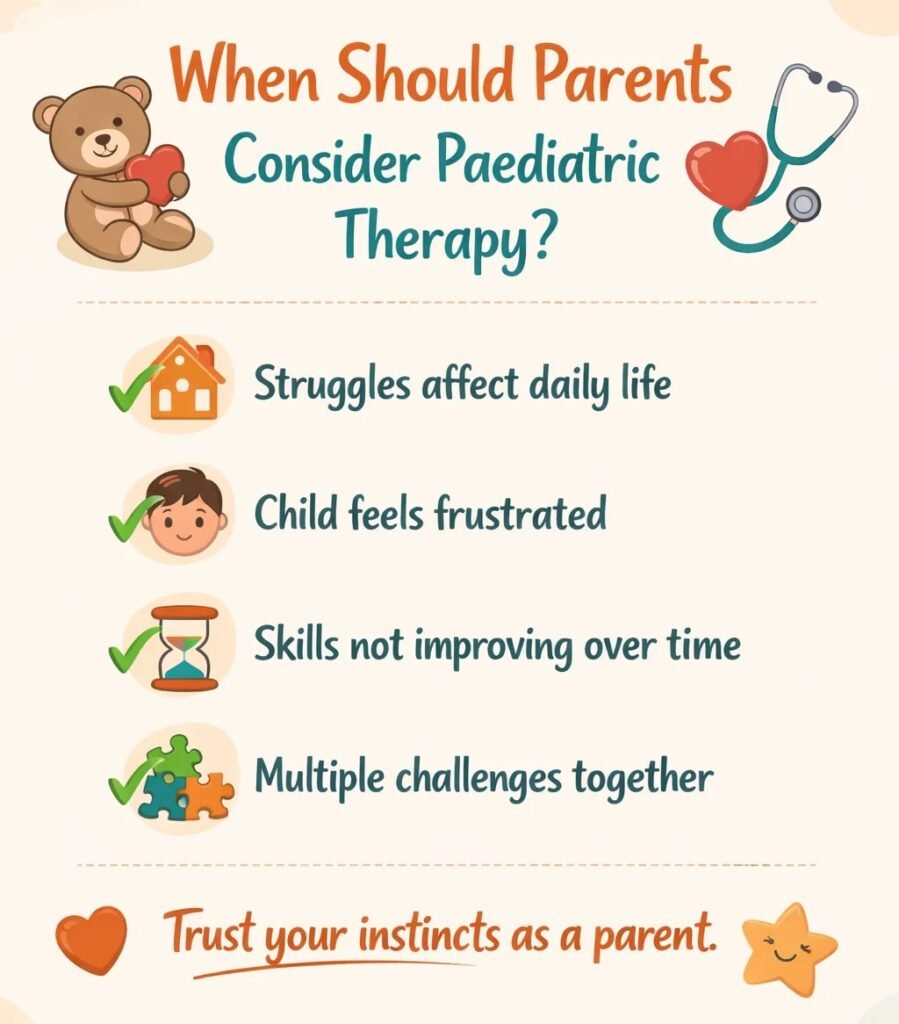
When Multiple Signs Appear Together
Many children experience challenges across more than one area. For example:
- Speech delays with behavioural difficulties
- Sensory issues affecting feeding and emotions
In these cases, families often benefit from integrated Paediatric Therapy Services in Australia, where multiple professionals work together to support the whole child.
The Role of a Comprehensive Paediatric Assessment
Assessments provide clarity and direction.
They help to:
- Identify strengths and challenges
- Guide therapy selection
- Set realistic goals
- Reduce parental uncertainty
Assessments are often the most reassuring first step.
What Happens in the First Therapy Session
The first session focuses on building comfort and understanding.
Typically includes:
- Play-based observation
- Parent discussion
- Initial goal setting
- Gentle interaction
There is no pressure on the child — therapy is always child-centred.
Common Myths Parents Believe About Therapy
- My child will grow out of it.
- Therapy means something is wrong.
- It’s too early to get help.
In reality, early therapy supports development and confidence.
How Parents Can Support Progress at Home
Parents play a vital role by:
- Following professional guidance
- Creating predictable routines
- Encouraging skill practice through play
- Celebrating small improvements
Consistency makes a significant difference.
Conclusion
Recognising the early signs your child may need paediatric therapy empowers parents to act early and confidently. While every child develops at their own pace, challenges that affect communication, behaviour, daily skills, or emotional wellbeing deserve attention. With access to trusted Paediatric Therapy Services in Australia, families can support their children in building independence, confidence, and lifelong skills in a nurturing and supportive environment.
Frequently Asked Questions
1. What are the early signs that my child may need paediatric therapy?
Early signs may include delayed speech, difficulty with daily living skills, emotional outbursts, sensory sensitivities, poor coordination, or challenges with learning and social interaction.
2. At what age can a child start paediatric therapy?
Paediatric therapy can begin at any age, including infancy. Early intervention often leads to better outcomes, as support is provided during key developmental stages.
3. Does paediatric therapy mean something is wrong with my child?
No. Paediatric therapy is designed to support development, not label or change a child. It helps children build skills, confidence, and independence at their own pace.
4. How do I know which type of paediatric therapy my child needs?
A comprehensive paediatric assessment helps identify your child’s strengths and challenges and determines whether speech therapy, occupational therapy, psychology, physiotherapy, or a combination is recommended.
5. How can parents support their child alongside therapy?
Parents can support progress by following therapist guidance, maintaining consistent routines, encouraging skill practice through play, and celebrating small improvements at home.